Available here.
Damn good movie. Before Sunrise serves up dialogue and performances that could have been stolen from your own life. Most impressively of all, for such a formless, free-floating movie, there’s a clear narrative drive swimming beneath the surface: where’s this going? Will there be a tomorrow?
I’m not kidding about that thing about how it’ll affect couples, either. By about halfway in, my girlfriend and I were reminiscing about how we first met, about our first date. Ethan Hawke and Julie Delpy are so convincing it’s hard not to be transported back to that first amazing day.
Unless you’re single. But I’m sure Real Dolls are more affordable by the day.
Available here.
My take on The Eagle benefited from the perspective of time. When I left the theater, I was thinking, “Well, that was pretty entertaining, wasn’t it? The guys in the paint and all. And yeah, the ending was a little pat, and I was squinting at how hard they tried to conceal Jamie Bell’s motivations from Channing Tatum, but did you see those rivers? They looked prehistoric. And the Romans fought like Romans. Maybe not a ripping good yarn, but at least a fraying one.”
The next day I thought, “Well, it’s probably not going to stand out too much a year from now.”
The day after that, when I prepared to sit down for my review, I thought, “Hey, it had some pretty fat dramatic flaws, right? A fun movie, but not a terribly skillful one.”
Sometimes I have to write about a movie the same day I see it. I suppose there’s something valuable in that, too–my reactions are more raw, my praise more generous. (If I dislike something, on the other hand, I tend to know right away.) But just a couple days’ perspective is all it takes to go from “That was pretty good!” to “Well, no need to see that again!”
Available here.
I was pretty neutral going in to Sanctum; I like James Cameron, who was executive producer on it or something, but aside from the potentially cool business in the trailer about “Never give up. Ever!!” and then sucking oxygen from a cranny in the ceiling, it looked quite bland. That impression turned out to be correct.
Bonus: someone already left a silly comment.
Available here.
I gave No Strings Attached a B. On some level, the very format of me professionally grading movies is inherently stupid–as if I’m the teacher and these movies are my little students trying their hardest to pass my indisputable standards–but I like grades as a reader and a critic. As a reader, they help me place a review in context; as the critic, they help me define my overall feelings toward a movie.
To get its B, No Strings Attached probably benefited from low expectations. An.. Ashton Kutcher rom-com. Oh. All right, I will go see that and tell other people what to think of it. I’m sure this will be a fine use of everyone’s time.
But then it turned out to be fairly funny. And while the fuckbuddy-turned-romance relatioship between Kutcher and Natalie Portman was nothing that special or groundbreaking, there were a lot of sideplots and supporting characters that gave that central relationship leeway to not be terribly interesting. Like Kutcher’s dad, former sitcom star Kevin Kline. And their friends’ burgeoning little relationship. And Kutcher’s TV job. That stuff, all good.
So when I think, just a day after writing the review, that maybe No Strings Attached was more of a B-, or even a C+ (the grade of deeply flawed but often entertaining stuff), and maybe I was overrating it because I expected it to be a pan of broiled bullshit, eventually I can only shrug. I had a good time. A much better one than I anticipated. A time that I would peg as a B: I could have been watching something better, but I enjoyed myself while I was there.
Available here.
When it comes to stuff I plan to review, I add movies to my Netflix queue for a bunch of reasons. Some of them are movies I’ve seen before and know will make for a good writeup. Some get recommended by my friends or by Netflix itself. Others I toss on there because some anonymous internet person made them sound interesting.
I heard about Better Off Dead as a movie where a teenager repeatedly tries to kill himself. Sounds awesome; you could mine a lot of black comedy out of that concept, and maybe expose some dark truths about adolescence most people won’t touch with a ten foot pole that’s being held by an illegal alien. But when I sat down to watch Better Off Dead, the suicide attempts weren’t only not the focus of the movie, they barely registered. They were just quick gags.
On one level, I was disappointed I wasn’t watching the movie I’d imagined. But Better Off Dead quickly established its own thing as a churning, riotous gag factory. Soon enough, I didn’t care it wasn’t what I’d signed up for. That’s the mark of a lasting movie.
Based on its January release and could-go-either-way trailers, I expected The Green Hornet to be pretty bad. It wasn’t.
I would hardly say I’m in Seth Rogen backlash mode at this point, but I’ve definitely cooled on him a little, if only to the point where I don’t think he automatically makes a movie better just by being in it. He’s used well in The Green Hornet, though, playing up his strengths as an incompetent goofball. He adds a self-centered side that adds to Jay Chou’s (as his partner Kato) status as the real hero here.
More subjectively, I had a good time watching this, I laughed a lot and director Michel Gondry does some nice camerawork, but I can’t really see myself sitting around some afternoon thinking, “Man, I could definitely watch The Green Hornet right now.” Yet I’ll happily check Netflix Instant to see if 2012 is available (it is!). That’s one of the things I have to do when I’m wearing my critic hat (which looks exactly like a wizard hat): do my best to separate what’s (semi-objectively) good from the stuff that I just like for no damn reason.
Otherwise, I would be recommending a lot of actiony bullshit everyone else hates. I mean, more than I already do that.
In which, against type, I almost hate it.
Part of my qualified dislike for Scott Pilgrim vs. the World (I liked a lot of the visuals and editing) stems from my mounting dislike of Michael Cera. Somewhere near the middle of Scott Pilgrim, that dislike graduated to full-on hatin’. His character is boring and empty and undeveloped. The comic character sounds deeper, or at least more well-drawn (*self-high-five for that pun*), but in the movie, I get little to no sense of who he is.
Also, I’ve got nothing to back it up, but if you’ve ever heard Simon Pegg’s real voice, it’s much deeper than the one he uses in his Edgar Wright projects. It feels like Cera decided or was instructed to similarly raise his voice in the Wright-directed Scott Pilgrim, because his voice is as high as a kitten doing a Bubbles from Powerpuff Girls impression. It is a strangleable voice.
If you’re not a hater, I could see bumping the movie to a C+ or even a B-. But the main character, his relationship, and the fights around them are a hollow void. I cannot see myself watching Scott Pilgrim again.
Full review here.
The Other Guys is like Adam McKay’s fourth good comedy. With this, Anchorman, Talladega Nights, and Step Brothers, that makes him responsible for the bulk of the great non-Apatow comedies of the last 5-6 years. He’ll be commanding my respect until I, in proper fickle critic form, turn on him just as he becomes most commercially successful.
As for the movie itself, I appreciated all the subversion going on. Samuel L. Jackson and the Rock’s deaths were especially hilarious. There were plenty of jokes I didn’t laugh at, but it wasn’t because they were bad jokes; they just weren’t the kind I’m particularly struck by. An awful lot of it was funny as hell, and if you spend any time thinking about it you’ll see hell is pretty dang funny.
Overall, I’d put The Other Guys a notch below Anchorman and ahead of McKay’s other work. If you liked any or all of those, I’d check it out.
Part one–where I discuss how I don’t think the end of Inception is a dream, but that Christopher Nolan doesn’t want us to be certain–is here.
Cards on the table: I’m of the camp that endings where “it was all just a dream!” are so stupid they should be stuffed in a sack and then chucked in the river, and then you need to watch over the river with a .308 in hand just in case they bob back to the surface and start wriggling around. This isn’t exactly a small camp. I’m sure that, even if Nolan isn’t a card-carrying member, he’s at least heard of this camp, and is familiar with its platform, i.e. that dream endings should be suffocated, drowned, and, if necessary, shot.
So I don’t think he’d be satisfied with your standard dream ending. Alongside all the evidence that suggests we’re in reality, but oh wait maybe we aren’t because Leo just appears at home just like how you instantly arrive somewhere in a dream, and hey, don’t his kids’ clothes look awfully similar?, the main proof Nolan hasn’t constructed a clear dream ending is the internet is still arguing about it left and right.
Obviously, it’s not clear. To paraphrase Marsellus Wallace, it’s pretty fucking far from clear.
Frankly, Christopher Nolan’s too good of a director and a storyteller to unintentionally leave his ending ambiguous. If he wanted to be sure one way or the other, we would be damn sure by the time Inception cut to black. Theorize about how it was all Saito’s conspiracy or Mal was right all along until you’re blue in the face because people are so tired of your ridiculous rants that they bruise your face with a mighty two-fisted blow, but there’s no serious evidence to prove anything beyond the following:
a) it’s real, or
b) DiCaprio never escaped limbo, or was only kicked up to one of the higher dream-levels, and would rather reunite with his children, even if they’re figments of his imagination, than risk discovering he’s back in crummy old reality
In other words, sometimes our desires and fantasies are more powerful–and more meaningful–than the objective facts. Based on the conclusion of the final scene, Christopher Nolan doesn’t want us to be able to leave with 100% certainty that DiCaprio’s made the right choice and will now live happily ever after with his flesh-and-blood kids.
I’m tempted to argue that if he’s happy, that’s all that matters, but you have to consider that if he’s still in a dream, his real-life kids are still stuck without their daddy. Ethically, then, that he doesn’t do all he can to ensure he’s not in a dream (like spent five seconds more watching his stupid top!) is a selfish, immoral decision.
But he’s wanted to come back to them so long, he’s lost his ability to know what’s real and what isn’t. DiCaprio got lost in his fantasy a long, long time ago. Now, he’s willing to do anything, including deprive his children of ever seeing him again, to get it.
That’s a pretty goddamn dark ending right there. I think it’s reality, and he and his kids can now be happy together. But the fact DiCaprio doesn’t even check the top means he doesn’t truly care. He just wants the feeling that he’s back with his kids, no matter the consequences. Does this make him a bad person? I don’t think so. But he is a deeply compromised one.
Dinner for Schmucks is my least favorite type of movie to review: the ones I don’t think are anything special but aren’t crummy enough to muster any strong anti-emotions either. These are B- movies, as well as the C+s of the “eh” variety (rather than the “holy cow, this wasn’t good, but parts of it were awfully fun to watch” type).
I will say, however, that I found the mice dioramas endlessly hilarious, the dinner shenanigans were great, and I see some promise from the writers, who pulled a lot of nice detail-oriented gags out of even their smallest characters. I’m interested in whatever they do next.
That, by the way, is one of the cooler parts of this job: since you see all kinds of junk you normally wouldn’t bother with even on video, you get a pretty broad look at who’s doing what in Hollywood right now. The names of many writers and directors don’t mean anything to most people, but sometimes I’ll see an obscure name and think “Oh yeah, no wonder this played like it was directed by a corpse. A corpse with poor artistic sensibility.” Or, alternately, “Ah, that’s why I liked this more than most critics, the guy who wrote The Departed did the script, dur.”
Not like I’ll remember the authors of Dinner for Schmucks three days from now. But when I watch their next project, check out their names, and see the credit for this one, I’ll have a slightly different perspective than if I’d never seen their intermittently funny but fairly generic comedy.


Captives
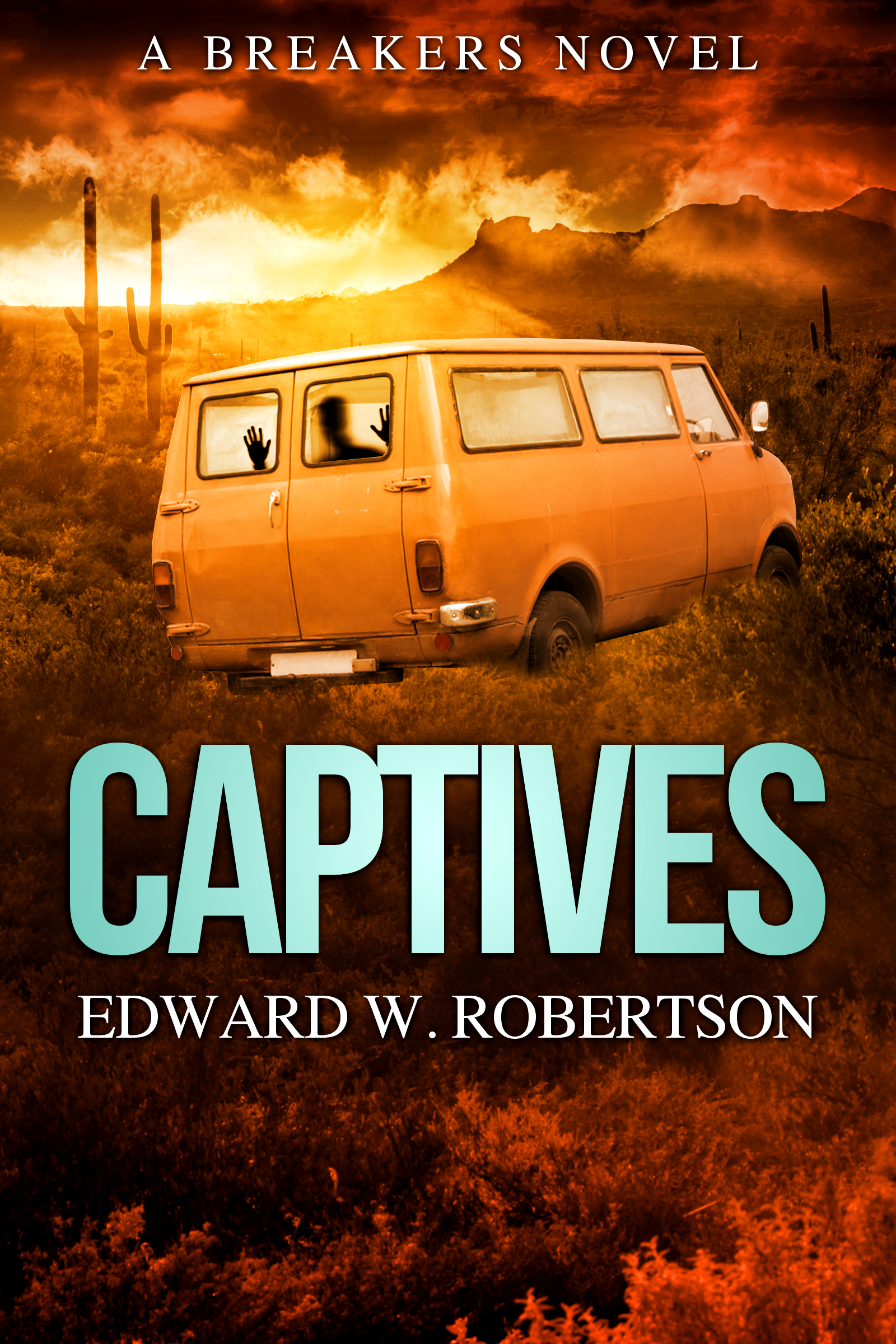
Once, Walt Lawson saved the world. Lately, he's lived in peaceful anonymity with his girlfriend Carrie. This morning, she's been kidnapped. Walt has a...
More info →





- Fantasy (5)
- Science Fiction (16)
- Breakers (11)
- Rebel Stars (3)
- The Cycle of Arawn (4)
- The Cycle of Galand (1)