Can be found here.
Given that it hasn’t been transferred to DVD, and it only has 548 votes on IMDb, I would have expected this movie to be several times worse than it was. Oh, there was plenty of bad, but there was a lot of fun stuff, too. Luis Guzman chiding Christopher Walken’s crew after they killed all his drug buddies for cash was one of the funniest things I’ve seen in a long time. Paraphrasing, Guzman delivers the following sentiment with the attitude of a disappointed parent: “You guys just killed a lot of people for not very much money. Why, you think nobody cares about drug dealers? We’re scum who sell drugs to 8-year-olds? You see any 8-year-olds around here? C’mon, guys. You can do better.”
So could McBain, incidentally, but it was still worth the $3.50 it took to track down a VHS copy.
This one was tough because it was a classic example of a movie I enjoyed but wasn’t blown away by. Watching a movie like that is like ordering a plate of spaghetti from a snazzy Italian joint: even if it’s the best damn spaghetti you ever had, and you walk away satisfied, full, and burbling with gases, you’ll probably regret not ordering something with more potential.
There’s neither anything to get too jazzed about or too incensed about, which means I have to dig extra hard to be entertaining about it. To hell with that. Right to hell with it.
Twitter-length summary: Probably worth checking out, especially if you like Robert Downey Jr.
I’m a huge sucker-chump for big endings, be they tragic or triumphant. That’s part of why, despite the humorous pay and the fact the hours eat big chunks of my weekend, being a movie critic is my #2 dream job. Once or twice a week, I get paid to go watch something that makes me all excited to be alive.
My kryptonite-like weakness for the big ending means I have to try extra hard to not overrate them once it’s reviewing time. Even something like Speed Racer, which I though looked great but mostly sucked, can get me amped up beyond all reason. I have to sit down and say Hey, me, yes, Speed won the big race, but remember how bored and annoyed you were through most of it? Remember how Spritle made you want to kill babies just in case they grew up to be like him? Remember all that? Okay, good, because I know the last scene you saw was pretty good, but the 130 minutes before that most decidedly were not.
Things get trickier with a movie like David Mamet’s Redbelt. The first two thirds are good, if a bit light on tension; the last third takes it up several notches; the ending feels close to transcendent. I’m certain it’s at least fairly good and possibly great, but how much of that is objective thought and how much is the post-coital glow of a decent story with a big emotional swell of an ending?
I’m honestly not sure yet; due to the laughable nonexistence of area movie screenings, I just caught it yesterday, and my review’s just half done. In concrete terms, it could end up anywhere from a B to an A- (though I’m leaning toward the upper end of the scale), which might sound like a fine distinction but carries a wide degree of difference–in my insular, moving-picture-addled mind, at least.
Trusting myself to pull together the right balance of the emotions I felt while watching it with the colder thoughts I had in the day or two afterwards is something I’m still working on. I guess you could say it’s the hard part of the job. That and forcing myself to go see “can’t possibly be good but can’t possibly be bad in a fun way either” fare like Made of Honor. I skipped that one, but by the time the year’s up, I’m sure I’ll have seen ten just like it. Remember that when you think I’ve got it easy, pal. Even when half of it consists of sitting in a dark room watching stories unfold on a house-sized screen, a job is always a job.
Now if you’ll excuse me, I’ve got a party hat, three bottles of champagne, and a stack of DVDs to attend to.
Specifically, bad ones, and not regretting it. There’s two big reasons I think any time spent watching movies is time well spent.
a) The list of things that are more fun than making fun of a bad movie with a bunch of friends is very short. The only thing we like more than watching bad movies is watching good movies.
b) Watching bad movies can teach you a ton about just what makes bad art bad.
This is especially true in this blessed age of DVD commentaries. Take The Texas Chainsaw Massacre 1 and 2. The first is awesome: nasty, brutal, fucked up, funny and scary. The second is so terrible my roommate, who’s seen plenty of awful shit in his day, apologized to us midway through, and offered several times to turn it off. No dice! No doubt it was a disaster, but after Robot Ninja and Voodoo Academy, the bar for badness is set so low it requires seismic drilling just to locate.
The reasons to hate Texas Chainsaw Massacre 2 are too long to fully elucidate. But for one thing, it looks awful in that weird ’80s horror movie way: everything’s bright and dirty and plastic, even when it’s set in an underground torture-carnival. Second, despite the fact it’s directed by Tobe Hooper, the same guy behind the first, it’s absolutely loaded with mugging, maniacal cackling, perverse character tics, and more egregious overacting than a high school production of The Rocky Horror Picture Show.
There’s no way to overstate how awful and annoying the whole thing is. It’s all so obvious and exaggerated and fake. What on earth would possess someone to make this? Why would a director think he was doing good to order all his actors to ham it up so hard you can catch trichinosis just by watching?
The answer to these questions and more can be found on the movie’s commentary, which I had no choice but to watch–Texas Chainsaw Massacre 2 was so painful and awful that at some point it stopped being bad altogether, instead becoming a fascinating study of a man utterly detached from reality. The commentary only confirmed this. According to Hooper, the first movie had a deep layer of black humor–who knew!–but apparently no one on earth got that, so when it came time to film the second, he decided to play up the humor even more, which apparently meant making it such a wrath-inducing crime against comedy that all the laughs transcended the mortal realm to become merely theoretical.
Yes, people, we’re to blame for Texas Chainsaw Massacre 2 being so bad. If only we’d had the smarts to see the humor in the first one, Hooper wouldn’t have been obligated to bludgeon us to death with it in the second.
In other words, a terrible, virtueless movie was made because Hooper underestimated his audience. He didn’t understand that we did get it the first time; the reason his precious black humor worked was because it was played so straight.
Not trusting your audience is usually a young man’s mistake (self included). The urge is to spell it out, to make sure every point and theme is clear as crystal, because God knows the drooling R-tards reading or watching our brilliance won’t be able to keep up without an authorial hand yanking them toward enlightenment. If you need to break yourself of this habit, watch The Texas Chainsaw Massacre 2, and then follow it up with the commentary. Stay strong; remember, the urge to suicide is strictly temporary.
Still kicking? Awesome. Now let’s make a pledge to never underestimate our audience again. And once you manage, be sure to let me know how the hell you pulled it off. I’ve got some stories in dire need of revision over here.
I missed Gone Baby Gone last year, which is a bummer, because in a ridiculously awesome year for movies, it would have been my #8 or 9 on the list. I’m sure that whole “based on a Dennis Lehane novel” thing helped, but since when does Ben Affleck kick ass? Casey Affleck is constant goodness, so perhaps it was an oversight to think his brother just lacked all talent, too. Gone Baby Gone had a few too many “Hey, remember what happened 20 minutes ago?”-style flashbacks, but mostly it was a tense, dark suspense piece with the kind of gray moral sensibility that tends to make the genre great.
As I was being pounded into my couch by a stomach-churning flu this weekend, I dug out The Matrix Reloaded, hoping a whole lot of cinematic beatdowns would take my mind off the viral one I was going through. A moderate success–there is a whole lot of ass-whomping in Reloaded, and five years after it came out, it still looks stunning.
I’ve always had a soft spot for the trilogy–the first one’s basically pitch-perfect, and even in the third one, the robots have souls–but watching it this time, I give it a thumbs-up for expanding its universe and throwing both Morpheus and Neo into doubt, but a big thumbs-down for spending the bulk of its time on plotlines that feel completely arbitrary.
Machines burrowing their way towards Zion to kill all humans? Good times. Now that’s some stakes. All that scene-wasting BS with city councillors, fifth-rate sidekicks, and characters who weren’t even in the first movie? Boooooo. Then there’s Neo’s storyline: talk to the Oracle to figure out what to do, then go talk to and beat up the Merovingian so he can get the Keymaker, then take the Keymaker to the Source and.. fix it all up then, yeah, fix it up!
It makes sense, but it doesn’t have that same sense of internal cohesion the first movie did. The action scenes have me drowning in my own drool, and there are some legitimately cool twists, but mostly, it’s a lot of MacGuffiny foolishness on the way to a cliffhanger ending.
The Wachowskis and The Matrix, David Twohy and Pitch Black, most recently, Neil Marshall and The Descent: these are some of the best fucking genre movies I’ve ever seen, yet the project after their breakout movie is always a big, crazy mess. A fun mess, usually with personality oozing all over the place, but it’s like they all ended up wanting to tell stories so big they sacrificed control for epic sweep.
I’d rather watch these guys flail than watch a bland director execute his lack of vision well. But you can’t make a movie as good as The Matrix by accident; surely these guys can find the same success that made their beloved breakouts so belovable. Let’s break it down, gentlemen! Maybe if you try going back to working on a smaller canvas, you’ll resist the urge to splash so much damn paint around.
Dear stuff:
Please happen.
Yours truly,
– me, the viewer
I Netflixed Morvern Callar based on the AV Club’s recent feature on modern cult classics, but after watching it, I’m pretty sure its cult consists entirely of those unlucky people who feel exactly like Morvern. Bummer for them, because if they are anything like her, they’re completely unsympathetic and uncompelling.
Here’s a short list of things I would rather do than watch one more scene where Morvern identifies with a lowly bug or lets her shame drive her away into yet another quietly understated episode with no narrative connection to the rest of the movie: 1) lie on my couch with a pillow over my face. 2) Eat a peanut butter sandwich and wonder if I’m going to barf for the next five hours. 3) Tape my alarm to my head, then make my alarm go off as I sit in my unfinished basement and think of all the ways I could be killed just walking out the door.
This is the kind of movie that makes people hate smart things. That’s right, Morvern Callar is the reason you were beaten up as a kid. It’s lifeless and joyless and insulting–okay, so she’s lost and confused and unhappy and can’t connect with other people. That was established within the first ten minutes. The following eighty is where the story was supposed to go.
That’s what bugs me to no end about movies and fiction with no higher aspirations than showing their emotionally crippled characters walking around being emotionally crippled. If that’s the only dimension you’re interested in working with, don’t be surprised when your audience ends up as a cult. You’re lucky to have one at all.


The Cutting Room: A Time Travel Thriller
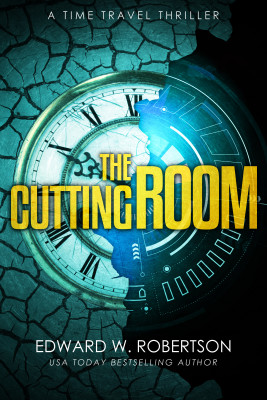
In the future, there are many parallel Earths--but only one of them has time travel. Known as Primetime, its criminals break into the pasts of other...
More info →


- Fantasy (5)
- Science Fiction (16)
- Breakers (11)
- Rebel Stars (3)
- The Cycle of Arawn (4)
- The Cycle of Galand (1)